
If you’ve been hanging around these communities for any amount of time, you’ll have heard the term energetic or astral parasite thrown around. It’s a catch all term for a malicious entity, usually one that’s trying to feed off of you for energy. Beyond that though people don’t really define these sorts of entities all that well. In this post I’ll be setting out to explain how most parasites operate. Through this I hope that people will be better able to identify and combat a parasite when one appears.
Defining the Parasite
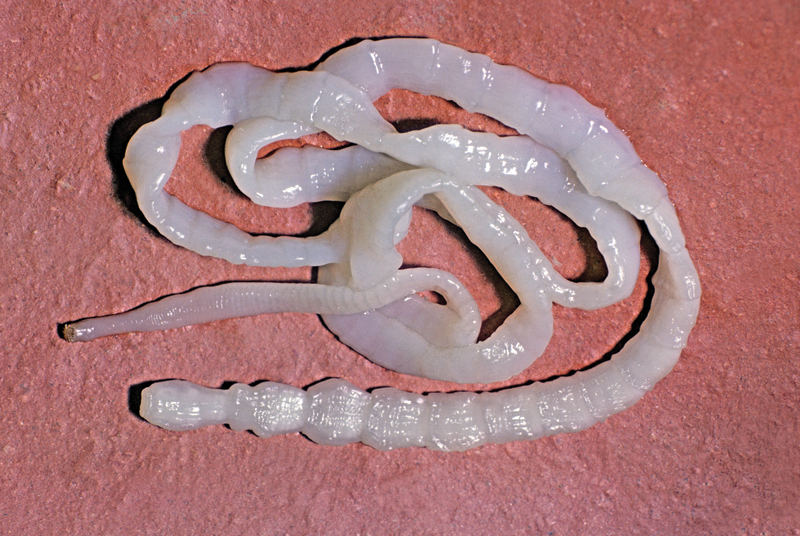
The definition of a parasite is an organism that feeds off a host, typically to the detriment of said host in some way. So how does that apply to an entity? After all, they don’t exactly sit inside your intestine sucking up nutrients.
The easiest way to define a malicious energetic parasite is ‘an entity that regularly feeds off of a host’s energy or the energy they output, without their informed permission’. Therefore the goal of a parasite has to have something to do with accessing a source to feed off of. While that’s a good start, it doesn’t really tell us much about how a parasite does what it does. So then how does a parasitic entity actually operate?
To talk about this first we have to discuss some very broad ideas relating to energy work. In the simplest terms, whenever we take on a desire or an emotion we ‘charge’ our energy in some direction. If we’re feeling ambitious, for example, that would be reflected in our energy. If we’re feeling happy, or lustful, or what have you, our energy should reflect that as it ‘prepares’ to take action and then is used in an action in that direction.
Some kinds of ‘charged states’ are hard to go to from other kinds, because they’re very different. It’s harder to become angry when you’re already in a jovial mood, and therefore it’d be hard for your energy to swing from a happy sort of charge to an angry sort of one. In that scenario your energy is charged in a ‘happy’ direction, and to go towards an ‘angry’ one would take a lot of stimulus in close to the opposite direction. So if someone calls you a dickhead you’d be pretty likely to just laugh it off, but if they run up and hit you with a club you could still become angry. Furthermore, this emotional and energetic swing displaces some energy, as someone who’s had an emotionally challenging day will likely have experienced. Jumping from one state to another constantly will cause fatigue over time, as the mind and body tire out from these constant shifts. crucially, being in a negative state of mind is often draining all by itself as well.
So why does all this matter? When we discuss a parasite, the charge of a person’s energy is usually at the root of their goals. When we feel and act strongly in one direction, our energy reflects that. We hypothesize that a parasite tries to inspire a certain mood or mindset and, by extension, energetic charge within the target, so that it can easily feed on energy that harmonizes with its own.
This is actually common knowledge in our circles, because the idea of the succubus makes the argument for us. A succubus is usually considered to be an entity that feeds off of a sexual output, which we would call a sexually charged, typically lustful energy. They, like the idea of a parasite, are encouraging you to charge your energy in a way that harmonizes with them, so that they can feed off it.
Now, we wouldn’t usually accept this definition of a succubus, and we certainly wouldn’t apply it to all spirit lovers. They’re just useful in this explanation because that’s where most of my readers have experience. Spirit lovers are benevolent, and they don’t do what they do to survive off of your energy, assuming they even take it in the first place to any degree. Parasites, on the other hand, are either doing it to survive or for some other, undisclosed reason that we do not know.
There’s this idea that the main threat of a parasite is draining you. If we assume that spirit lovers survive off that ‘energetic profit’ that they gain from having sex with you (which Is probably not the case), the effect of it is very minor. The problem with a malicious and parasitic entity, unlike physical parasites, isn’t in the feeding portion at all, it’s what they do to feed off of you.
The Parasite Process
So with all that background knowledge in place, how do parasites actually choose their targets, and what do they do to feed? Target selection is actually the easiest thing in this entire blogpost to discuss. Parasites almost always choose targets based on opportunity. Have problems with depression? An entity that feeds off of energy that is charged in that direction is more likely to target you. Delusions of grandeur? You can get a parasite that encourages having a huge ego. Hell, if you have a tendency to be happy all the time, you could technically get a parasite that further encourages happiness. Generally people aren’t going to have an issue with or even discover a parasite that helps them feel generally happy though, assuming their existence is more than theoretical.
With the easiest part out of the way, how does a parasite work its way in? There’s a lot of diversity in terms of experiences with these kinds of entities. The simplest of them aren’t subtle at all, and try to use forceful means to keep you from shaking them off. An example of this is when someone tries to banish a parasite and feels really bad about performing the banishing, to the point they don’t perform it or, even worse, faint during it. The good news about this type of parasite is that it’s very easily diagnosed. If an outside force is actively trying to prevent you from fighting back when you’re going to do something like perform a banishing, then you know you have a problem.
It’s the subtle actors that are more of a problem. I’d divide these broadly into two camps: the ones that try to remain hidden from your attention entirely, and the ones that pretend to be something else that is positive. The former operates by trying to worm itself into a weakness you have. Let’s say that for example you have an issue with getting angry all the time, and this issue relates to a feeling of inferiority or weakness, so you feel like you have to act angry to protect yourself. An entity that is trying to silently attach to you would try to take advantage of that root cause that you’re ignoring and sort of ‘attach itself’ (for lack of a better term) to that root cause. Because this insecurity is a strong part of yourself, if you banished the parasite it would very easily return due to that blind spot in your self understanding, provided you even recognized it in the first place. This is normally something I refer to as ‘anchoring’, and it’s very common for parasites that target negative emotions with unseen root causes, like irrational anger or depression. In its little space it can feed off of you to its heart’s content.
To get rid of an anchoring entity permanently you often have to fix the root cause of the issue. However, combining a strong banishing with some form of preventative warding can offer relief for enough time to work on the root cause, especially if you know what the root cause is. The good thing about these situations is you typically know there’s a problem even if you can’t immediately see it, so you often are willing to seek the help you need to get out of the situation. Banishing is often used for the diagnosis stage, as it can be very difficult to tell if there’s a parasite just through discussing the issues because the issues always have a strong psychological side. If banishing creates a short noticed change to the user’s mood and tendencies before the problem resurfaces, we can start to guess at there being a parasite within said user. If the positive change from banishing is very long term, or if the change doesn’t exist at all, then either the parasite doesn’t exist or was at that moment dealt with successfully.
Last on the list we have parasites that pretend to be positive forces, either by pretending to be another entity that you know or deity/concept that you work with, or just positive in general. There are two times where this is common. The first is when you have very confused preconceptions about an entity or archetype that you constantly work with. The parasite will take the personality you ‘expect’ that archetype or entity to have and act as it, and encourage further devotion towards the specific wrong ideas and self-beliefs it represents as its way of feeding. When talking about archetypes (deities or other special named entities), often the kinds of ideas that encourage this are ones that involve a very personal and special relationship with said archetype. If you believe you’re the unironic son of a deity or dating Zeus or some similar bollocks, for example, that’s the kind of delusional belief that a parasite could easily take advantage of. If the entity that it’s copying is not an archetype and is one that is constantly around, it seems to either force said entity away, or somehow greatly limit communication between you and it. Whichever is the case it helps complete the illusion. Of course, in those situations the reason it used that entity depends on the entity it’s copying and your beliefs towards it. It’d be impossible to describe those, since it’d be different for every person. Generally speaking the second of these is quite rare, especially if you have a very close bond with the spirit in question.
The other case mainly seems to happen with a bloated or deficient self image. The entity will often pretend to be a really special one while declaring how special you are. It’ll go on and on about your special skills and talents that you probably don’t have. Who wouldn’t want to keep something around that makes them feel special and powerful? If you have a lacking self image they build it up with lies until it’s bloated, and if you already have a bloated one they simply play to your hubris.
This last example is probably the most dangerous. People don’t only not notice there’s a problem, like is often the case in some of these other situations, but they consciously reject the idea of there being a problem. Someone with a bloated self image is very hard to help because they actively resist getting help for a problem they don’t believe or want to believe exists. To call into question these thoughts and experiences is to call into question how ‘special’ they are. These are also the people the most likely to do damage as their personality leads them to attack other people or start insane cults to satiate their bloated ego. They are also, ironically, probably the ones most likely to declare other people have parasites when said people do not, because in their extremely misshapen worldview anyone who questions them must be evil or stricken with a huge problem. These parasites are easily diagnosed by an outsider in most cases once it’s determined that it isn’t entirely a psychological delusion, but they are very difficult for the sufferer to deal with, because they actively reject a diagnosis.
There’s no way a simple blogpost could quantify and lay out every type of potential approach a parasite could make, however in my experience these are the most common situations that evolve from an actual parasite. There are also some nebulous topics I’ve avoided covering with them, like whether or not they can ‘die’ or fade away, or what exactly creates a parasite, if anything special. The problem with delving into that topic is that we’d have to really dive into the nature of a parasite and come up with a lot of potential possibilities, multiple of which could all be true. That’s not typically relevant when you’re dealing with one in a common scenario, so I decided to steer clear from that topic. I also didn’t go into excessive detail in terms of diagnosis. It’s mainly a conversational process, where you figure out the situation and look for any details that seem irregular in someone who was normally suffering the problems that that person is, along with some tests that I touched on above. Having experience helping people with their situations really helps in diagnosing other situations.
Since I feel a strong need to touch on it, we’ll spend the rest of the blog post talking about how the online occult community uses the parasite term.
The Laziest attack in the book
As we’ve gone over in this blogpost, diagnosing a parasite is usually a process. To tell someone who’s only suffering from psychological issues that they have a parasite is very damaging, as they would then pursue cures for parasitism first, rather than the appropriate kind of help. I’d like to point out that I do not use readings as the sole factor to determine if there is a parasite afflicting a person. While I am personally confident in my reading ability, sitting here and focusing on someone or pulling some cards and deciding if they had a parasite or not just based on that would be extremely lazy. Like I said, there are ways we can start to diagnose a parasite in a suffering person. If I do a reading and believe someone has a parasite based on that, then it should be a simple matter to diagnose it in other ways, shouldn’t it? When the possibility of causing real psychological damage by mis-diagnosing someone is there, it’s negligent not to do one’s due diligence.
This is why I take such strong issue with people online who throw around the parasite term like it’s the hottest new insult on the block. If you’ve been around for any length of time, you’ll run into people who claim that some person has a parasite with nothing but a reading. Hell, most of the time these people will simply level these baseless claims at people they dislike, even going so far as to say said person is spreading parasites to others, actively and willingly. They’ll claim they’ve done a reading, of course, but normally even that is little more than a deceptive lie.
Not only is this petty, but this brings real harm onto people. If someone is looking to you for help, to give them nothing but a shitty reading or to screech about how someone you dislike has a parasite is the absolute height of harmful dishonesty. What are they afraid of? That when they actually do their due diligence they’ll find out that they were wrong at first? If they discover they were wrong that’d be the perfect chance to examine their methods and conclusions. The only reason to avoid even basic due diligence is to serve your own self image. When your method and reading is perfectly nebulous, then how could anyone prove you wrong? Better to avoid due diligence and save face than actually help someone.
The damage isn’t just limited to the person’s psychology. For example, often times people in new relationships will wonder if their entity lover is a parasite or some other malicious entity. It’s a pretty common worry among new people. If all you do is give them a reading and declare that it is a parasite or isn’t, you could be doing real damage to a relationship, or ensuring that a problem they have goes unchecked. Ask questions, figure out what their situation is like and why they think those things. Don’t just sit there larping for five minutes to serve your own ego. You could be ruining someone’s relationship or putting them in a dangerous position just because you aren’t willing to face that your first impression could be wrong.
In summary, I wanted to do this blogpost to actually explain what a typical parasite is like, how they operate, and offer some thoughts on how one is diagnosed. A large part of why I wanted to do this is because people very much over-use the term to attack people they dislike or to serve their own ego. Don’t be one of those people. If you truly want to help someone, do your due diligence. Talk to the person, figure out their situation, work out what seems abnormal about their suffering if anything. If you’re not even willing to do that much, don’t even think about using the term parasite to describe someone’s problem.
2021 is here. The last few weeks have been very long and rough for me. I know a lot of my readership is on /x/, I was told some weirdos went onto succ-gen and tried to defame me. I apologize to the guys who were in that thread trying to discuss entity lovers, I’m sure you didn’t like seeing a bunch of posts about me. To anyone who defended me, thanks a lot for taking the time to do so. One of them also raided The discord server I used to be in, and started screeching about me at about 1 in the morning. Shockingly I was awake at the time, so I had a discussion with the guy. That’s still up if you want to see it. I don’t have anything to hide.
Next month I have a special blogpost planned for you guys. A person I know, against my advisement, attempted a ritual in the book Liber Lilith literally. I decided I’d interview him and discuss the process and results in my next blogpost. Though I’m against attempting rituals like that, I will be presenting his interview and thoughts as fairly as I can.
If you want to read more, check out the categories below. Make sure to subscribe to get the most up to date information about Spirit Lovers!


 Spirit Lover Information Hub
Leave a comment